Brize Norton Primary School
Prospectus
2006/7
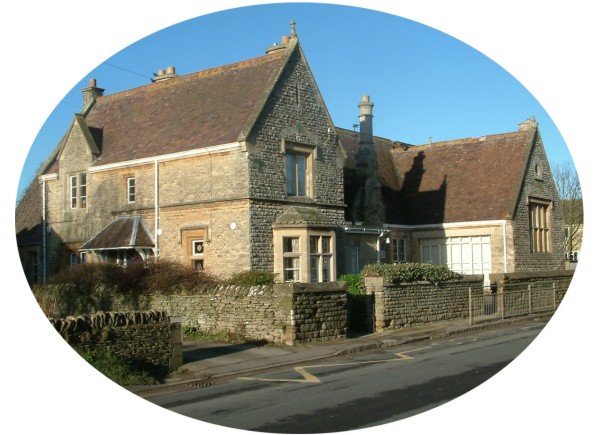
INFORMATION FOR PARENTS
School Year 2006 -2007
Brize Norton Primary School,
Station Road,
Brize Norton,
Oxon.
OX18 3PL
Headteacher – Mrs Andrea Moss
Tel 01993 842488
Oxfordshire County Council,
Macclesfield House,
New Road,
Oxford OX1 1NA
Director of Learning Culture – Mr K Bartley
Prospective parents should telephone the headteacher to arrange a suitable time to visit the school, see the children at work and discuss any matters concerning their child.
HEADTEACHERS WELCOME LETTER FOR PARENTS
OXFORDSHIRE COUNTY COUNCIL
BRIZE NORTON PRIMARY SCHOOL
Station Road, Brize
Norton,
Oxon OX18 3PL
Tel 01993 842488
Headteacher Mrs Andrea Moss
Email: Office.2250@brize-norton.oxon.sch.uk
www.brizenorton.org.uk/bn_school
Dear Parents
Welcome to Brize Norton School!
This booklet is designed to tell you about our school, and will normally be given to you when your child first starts school.
Brize Norton is a small Oxfordshire village with a population of approximately 1200. Brize Norton School was opened in 1875 and since that date has played an important part in the life of the community. With your help we hope to continue this tradition. We value very much the help of parents and other adults in our school.
The children in our care benefit greatly from the knowledge that home and school are working in close liaison to promote their development. We hope to make it a happy partnership.
It must be stressed that a booklet of information is no substitute for direct contact. We welcome your visit to the school.
Yours sincerely
Andrea Moss
HEADTEACHER


|
Page 2 |
THE SCHOOL STAFF
Headteacher
Andrea Moss
Teaching Staff
Sophie Kerr
Alexandra Rae
Kerry Hookham
Jo Whatley
Sheila Henderson
Laura Udall
Lindsey Ridgeway
Site Manager
Mair Cox
Learning Support Assistants
Lyn Bostock
Lin Godfrey
Annie Coombs
Kim Bartlett
Jo Dickson
Paula Pugh
Secretary
Rosie Drake
Admin Assistant (Dinner Money)
Celena Byng
Kitchen Staff
Tammy Howard
Ruth Taylor
Lunchtime Supervisors
Anne Green
Kim Bartlett
Jo Dickson
Cleaner in Charge
Melanie Jones
Lollipop Lady
Rose Meadows










|
Page 4 |
THE GOVERNING BODY
CHAIR
Tracy Barnett - Parent
VICE-CHAIR
Phil Sampson - Parent
Andrea Moss - Headteacher Ex-Officio
Christine Eaglestone - Parent
Matthew Webb – Parent
Mark Pummery - LEA
Shane Rae – Community
Rev Roy Turner - Community
Simon White – Community
Alexandra Rae - Staff Representative
CLERK TO GOVERNORS
Ruth Taylor



|
Page 5 |
THE AIMS OF BRIZE NORTON SCHOOL
The aim of our school is to educate and nurture each child so that s/he can develop personally, socially, emotionally physically and intellectually throughout his/her time with us. Each person is a valued member of our school community and is positively encouraged to value and respect others also.
We believe that children learn best when they are secure and happy and interested in the work they are doing. We teach co-operation, build confidence and give time for reflection about how we behave towards each other. The children are encouraged to take a pride in their environment, respecting it as they respect each other.
The whole curriculum is offered in a rich, stimulating, and caring environment. Teachers guide, instruct, and share their own enthusiasm for learning with the children and aim to meet the requirements of the National Curriculum and the Foundation Stage for Learning. It is every child’s entitlement to receive a broad and balanced curriculum and this is achieved by regular monitoring and assessment of each child’s work. Each child in turn is encouraged to achieve his/her personal best, experiencing, each at his or her own level, the joy of learning. Whilst aiming for personal achievement we also recognise the need for all children to reach the required standard in the core subjects as laid down by the Government. All staff are offered opportunities to develop their personal expertise and professional skills for their own development as well as for the benefit of the school.
We believe that successful learning depends on a good working partnership between home and school and work to ensure parents feel they have a rightful place in the school community.
We are proud of our status as a village school and believe that as such we have a lot to offer the children, not least, a pride in their heritage and a safe environment to study at many levels, as well as looking out to the wider world beyond and the world they will meet when they leave us for secondary school.
|
Page 6 |
ADMISSIONS POLICY
1. In accordance with the County’s admissions policy the governors aim to provide education for all primary aged children in the village of Brize Norton. The priorities laid out in The Oxfordshire admissions policy will be observed.
2. While space and staffing permits, as from September 2006, children will be admitted in September after their 4th birthday on a full time basis if parents so wish. We will also offer the facility of 5 afternoons if parents/guardians feel their child is not ready for full time schooling. Legally, your child does not have to start until the term after your child is 5.
3. Children will make a visit to school in the summer term on a date to be decided. This will be during the latter part of the term. (For more details please see the Oxfordshire Admissions booklet.)
|
Page 7 |
USEFUL INFORMATION
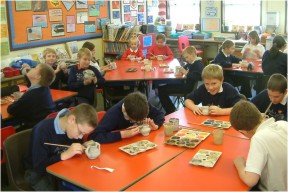
School starts each day at 9.00 a.m. and finishes at 3.15 p.m.. Lunch break is from 12.00 p.m. till 1.00 p.m. School lunches are cooked on the premises. Lunch money is collected on a Monday. Correct money should be sent in an envelope with your child (children)’s name on it as this saves very valuable time and it is helpful should your child lose the envelope. Should you believe you might qualify for free school meals, please contact Andrea Moss or Rosie Drake the school secretary. The matter will be dealt with in strictest confidence. Children need to have a change of shoes for wearing indoors. This is very important since most of the school is carpeted.
Each child should have a pair of navy shorts and a plain white T-shirt for PE. These should be in school at all times and in addition in Winter, they should have tracksuit bottoms/leggings, sweat-shirt. These will be kept in a bag on the child’s peg. Bags are available from school if required.
Children wear school uniform which consists of our Brize Norton sweatshirt which comes in navy or red. It is worn with a red, white or blue polo shirt and navy blue trousers or skirt, (not denim please). It is essential that all clothing is named. We encourage the children to be responsible for their own clothing and possessions by supervising the cloakroom area. Lost property is kept in a box in each classroom.
Children swim at Carterton pool on Tuesday afternoons on a rota basis and need swim-wear and a towel. They are required to wear a hat and these can be purchased from school. They travel by coach to Carterton. We ask for a contribution to help cover the cost of swimming. Children who are in school are expected to take part in this activity.

.JPG)
_0.JPG)
|
Page 8 |
For reasons of safety children should not wear jewellery in school. If they have their ears pierced, they should wear studs. No responsibility can be accepted for these by staff and they should not be worn on swimming days or PE days.
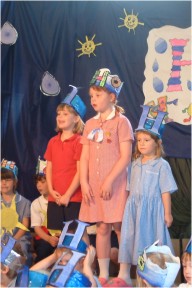
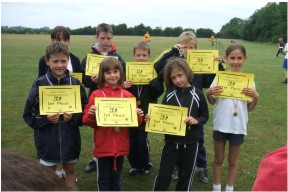
In the Autumn and Spring terms each class prepares an assembly, once a term on a Friday afternoon at 2.40 p.m in the School Hall. The children share their work and achievements. Parents are very welcome to join us for this assembly. We also hold a certificate assembly in the School Hall once a term at 2.30 pm when we present music, swimming and curriculum awards to children throughout the school. These include behaviour, progress and improvement awards etc. Again, parents are warmly welcome to celebrate their children’s success.
In the event of illness or an accident, parents will be contacted as soon as possible. It is therefore very important for us to have a day-time number where we can reach you and that this is kept up to date.
Due to a tightening in legal legislation, the staff at Brize Norton School are willing to administer prescribed medicine (provided it is clearly labelled with the correct measuring spoon attached) and will administer other medicines providing written instructions are given and authority (which needs your signature) given to the teacher. All medicines should be given to a member of staff and never left in the child's possession. Thank you for your cooperation.
|
Page 9 |
If a child is going to be late for school or absent through illness, we appreciate a message before 9.30 a.m. as we are concerned if a child does not arrive. We are required to record reasons for absence daily, so if for any reason your child is going to be away, please send a letter explaining the circumstances. Unauthorised absences are recorded and reported to the Department for Education annually.
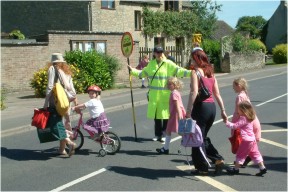
We have a school patrol crossing and we urge parents to show their children the importance of using it as the safest place to cross. PLEASE encourage your children, even when they are with you, to stand by the Lollipop Lady until she goes out to guide them across. It could mean saving their lives.
Parking near the school is very limited so we ask parents to be very careful not to block our neighbours’ drives. They are very interested in the school and supportive of us so this is a consideration we would appreciate. There is a village car park which is free only a short distance from the school and there is a footpath from there to the school. It is parents’ responsibility to see their children into school and to collect them after school.
We always need help in the school. If you can offer us one session, or even one hour, each week we will be very grateful. Please contact one of the staff to arrange a time.
Please discourage your children from bringing toys and other valuable items into school since we cannot take responsibility for them should anything happen to them.
|
Page 10 |
DATES FOR SCHOOL YEAR
SEPTEMBER 2006 - JULY 2007
Autumn Term 2006
Term 1 - Wednesday 6th September to Friday 20th October
Half term - Monday 23rd October to Friday 27th October
Term 2 - Monday 30th October to Friday 15th December
Spring Term 2007
Term 3 - Monday 8th January to Friday 9th February
Half Term - Monday 12th February to Friday 16th February
Term 4 - Monday 19th February to Friday 30th March
Summer Term 2007
Term 5 - Monday 16th April to Friday 25th May
May Day Monday 7th May
Half Term - Monday 28th May to Friday 1st June
Term 6 - Monday 4th June to Wednesday 25th July
TIMES FOR THE SCHOOL DAY
Time spent teaching during each normal day:
Registration 9.00am
Morning break 15 minutes
Lunch 12.00 p.m. – 1.00 p.m.
Afternoon break for infants 10 minutes
End of school day 3.15 p.m.
Working time during a week for Juniors is 23 hours 10 minutes and for Infants is 22 hours 20 minutes. These times do not include registration, assembly and breaks.
|
Page 11 |
STAFFING AND ORGANISATION
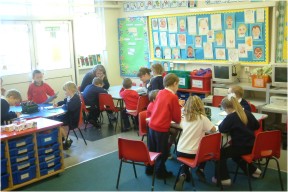
Brize Norton Primary School takes children from the ages of five to eleven. There are four classes and two part-time teachers share the year 3/4 classroom. The school secretary is in the office until 2.30 pm and we have learning support assistants for a most of the time in each classroom. Other adults help on a regular or occasional basis.
There are around 100 children on roll. They are grouped into four classes for most activities and within these are smaller groupings. The organisation is as flexible as possible so that the needs of individual children can be considered. The children are grouped by age, ability, socially depending on the activity they are involved in.
ACCESSIBILITY PLAN
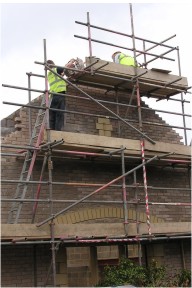
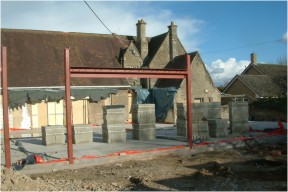
We are an all inclusive school and as such endeavour where possible to admit children with any disability. August 2006 will see the completion of our new building. This includes 3 new classrooms, toilets (all with disabled toilets) and a central resource area, playground and artificial playing surface. The hall has also been upgraded. Accessibility is now complete. These alterations mean we will have the facility to admit pupils with physical difficulties.
The accessibility plan will be reviewed annually. This will include a review of the curriculum. If you want any further information, the full plan is available in the school office.
PASTORAL CARE
Pastoral care is exercised by all staff while the children are in our care. This includes all teaching staff learning support assistants and lunchtime supervisors. It is our aim to create a family atmosphere where all adults care for all children and all children care for each other. Children are supervised at all times and should an accident occur, parents are contacted as soon as possible. Failing this, medical help is sought by the headteacher in loco parentis.
|
Page 12 |
SAFEGUARDING CHILDREN IN EDUCATION
The school has effective child protection policies and procedures in place in accordance with guidance by the Secretary of State, LEA guidance and locally agreed inter-agency procedures.
DISCIPLINE
The children are encouraged to be responsible and thoughtful in their behaviour, considering how it affects others in the community. We have a school council. Two children represent each class. Issues are written by the children or adults into the school council book. The council meets with a member of staff on Monday morning to discuss issues that have arisen. These are then brought to the attention of the rest of the school so that all the children are involved in the decision-making regarding break times. Awards are then given out for good behaviour, kindness and the most well behaved dinner table. Other awards are given for excellence in curriculum areas focussed on each term. Circle Time plays a large part in the children’s involvement in the general behaviour around the school and their commitment to each other. Issues like bullying are addressed in this open ’No Blame" atmosphere and the children agree strategies to deal with them. Each class discusses and negotiates the class rules relevant to them. If a child’s behaviour is giving concern, this is discussed at a personal level with the child and later with the parents if this is considered appropriate. Kindness, helpfulness and responsible behaviour are celebrated along with other achievements at our certificate assemblies.
COMPLAINTS
Should any parent have a complaint regarding school curriculum, or any other matter, they should first contact the class teacher or the headteacher as appropriate. If attempts to resolve the complaint fail at this stage the next step would be to contact a governor who would advise on the appropriate action.
|
Page 13 |
CHARGES FOR SCHOOL ACTIVITIES
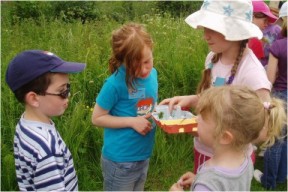
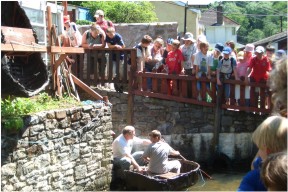
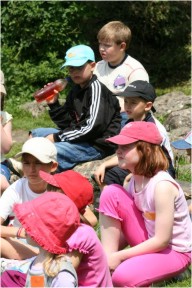
Study visits are an important extension of the children’s learning and visits are often planned as part of the children’s topic work. The older children are given the opportunity to make at least one field study outing where they can study an environment different from their own. In line with county recommendations, the governors have adopted a policy where voluntary contributions are requested to cover the cost of visits and other activities. Each request will state that there is no obligation to contribute and that a child will not be treated differently should their parent choose not to pay. In the event of the cost of a visit not being met, the activity would have to be cancelled. Activities for which the school charges, include the board and lodging element of residential visits activities outside school hours and the costs of materials that are used at school and later taken home.

|
Page 14 |
THE CURRICULUM
Our studies are planned to ensure that all children are given every opportunity to gain maximum achievement in the skills and knowledge outlined in the National Curriculum, and that individual needs are recognised and catered for. These studies provide a focus for our work each term and give the children the opportunity to find information through personal research, observation, discussion and reading. They offer the children experience in recording their findings in writing, mathematically, in drawing, painting and music. All of these activities will be going on during an ordinary school day.
FOUNDATION STAGE
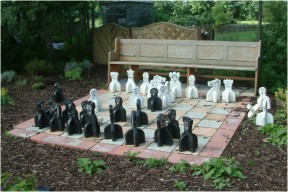
Reception children (4-5 year olds) are at the Foundation Stage and work towards achieving Early Learning Goals (ELGs) through the provision of Foundation Stage Activities. The children are in a mixed age range class consisting of Foundation and Year 1 children. We have recently opened our new garden, which has been developed to support the Early Learning Goals.
ENGLISH LANGUAGE
The teaching of English occupies a large part of the time in school. The National Literacy Strategy emphasises the entitlement of children to a structured English lesson each day. Literacy is an aspect of learning which is a fundamental part of all the other areas of the curriculum. Children have a wide knowledge of English, in both its spoken and written forms, before they start school. They develop this knowledge not only in the classroom but at play and at home as well. In planning for the children's learning in English the knowledge which the children bring to school is taken into account. By building on what they already know, we develop the children's skills and understanding as set out in the National Curriculum.
Children are taught to read in small differentiated groups guided by the teacher or other adult helper. Children are taught a range of reading strategies to get at the meaning of the text and are encouraged to explain their response to the text. The teacher also models reading strategies to the whole class using both big books and enlarged texts. We have a wide range of fiction and non-fiction books and children are encouraged to use these for their studies, their personal interests and simply for pleasure. Please read our ’Sharing Books with Children’ booklet. Children will need a book bag to take their books and reading record to and from school. These can be bought from school if desired. Our aims in writing are to help the children become confident writers for a variety of purposes, audiences and in a variety of styles (e.g. charts, diagrams, factual, reflective, etc.). To become effective writers children need:

|
Page 15 |
Our aims in speaking and listening are to provide a range of situations, audiences and activities which encourage children's competence, precision and confidence in talking. Active listening to what others have to say and reflecting upon the ideas of others is also a very important part of learning. We provide an atmosphere conducive to purposeful talk so that children may become effective communicators.
MATHEMATICS
Mathematics is taught through a wide variety of activities. We use a maths scheme, which follows the Numeracy Strategy guidelines. We will draw on other materials and encourage cross-curricular maths. Our teaching is aimed at understanding and enjoyment. We aim to provide the children with basic numerical skills, practice in these and the ability to apply them in a problem solving situation. We run a RM maths computer programme as a support to children’s mathematical learning.
SCIENCE
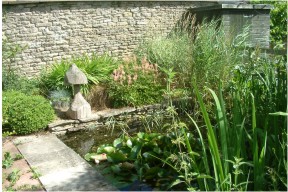
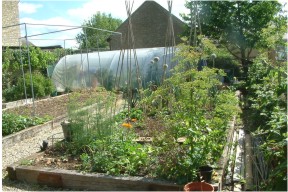
Our aim is to encourage the children to think scientifically and to apply their thinking independently and in a wide variety of situations. Children learn to apply scientific methods of investigation and to acquire scientific knowledge of the world around them. Our science work follows the QCA Scheme of Work using Collins and Heinemann resources and topics are covered through a 2 year study programme designed to cover the National Curriculum programmes of study. We are very fortunate to have our own garden, willow dome, wild flower area, pond and chicken run. We use these facilities to enhance the science curriculum.
INFORMATION TECHNOLOGY
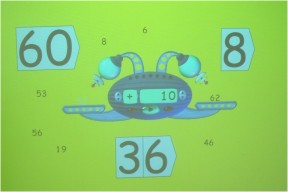
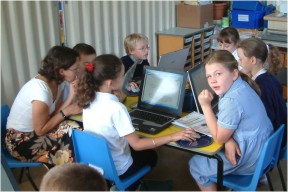
The children use computers as a tool, to extend their recording, to handle data, and to challenge their mathematical thinking. The word-processor is widely used by all the children. Each class has its own computers which have internet access. We have an ICT Club on Wednesday after school for Y5/6. The club helps keep the school website up to date as well as developing their skills. I.T. is taught as a discrete lesson and computer work is incorporated into other areas of the curriculum. Other equipment which is used as appropriate includes digital cameras, video, audio equipment, dictaphones, and a roamer which is used for control technology. All classes have interactive white boards. In addition we have 14 laptops which have internet access and can be used for whole class lessons.
|
Page 16 |
DESIGN TECHNOLOGY
Each year group works independently and children are encouraged to plan their design work and follow it through to the production stage, redesigning and evaluating as necessary.
THE ARTS
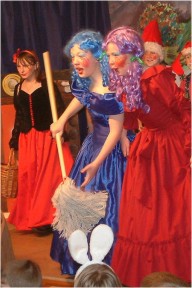
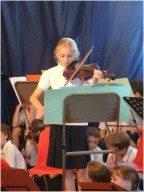
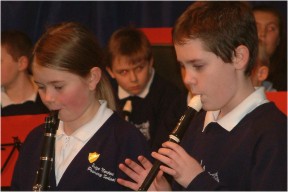
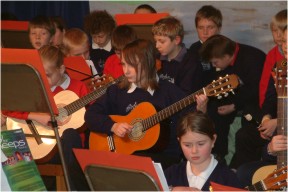
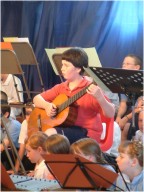
Music and art hold a strong place in the life of the school. The children sing and have the opportunity to play their musical instruments, as well as to listen to recorded music, each assembly. From Year 3 children have lessons on the recorder each week. Some children have violin, flute, clarinet, cornet, trombone & saxophone lessons once a week from the Music for Schools Foundation music teacher or Oxfordshire Music for Schools Service. These are children who have shown some interest and aptitude. We have a wide range of percussion instruments for general classroom use. We take the older children regularly to the concerts in Oxford given by the Youth Orchestra and we take part annually in the Festival of Voices at Dorchester. The school produces 2 concerts a year, where children perform any instrument they learn either at home or school. All children take part in singing, irrespective of ability. The concerts are usually combined with a drama production, which again involves all children. Observational drawing is particularly encouraged both to help the children to look carefully, and for the satisfaction they gain from their finished piece of work. They also have many opportunities to work in a variety of media including paint, clay, collage and print as well as studying the work of other artists. The children benefit from occasional visits of a local artist.
FRENCH
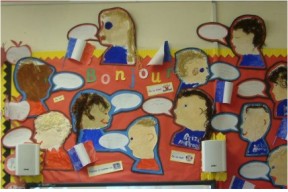
French is taught to all children. The emphasis is on spoken French but the scheme followed does involved written French with the older children.
PE
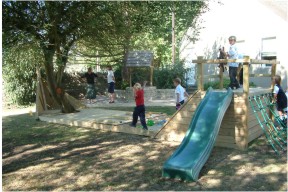
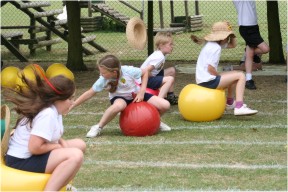
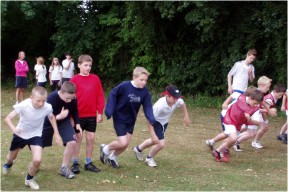
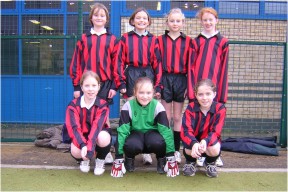
We have a village hall is used for gymnastics on Mondays and Fridays, the School Hall for dance and drama, and the recreation ground is used for games when and where there is not enough space on our artificial surface. The children are encouraged to use their breaks for activities such as skipping and team games. The school house garden has been redesigned as a Foundation Stage and Infant play area during the year. A football club takes place on Monday from 3.30 p.m. to 4.30 p.m. This is run by a football coach formerly from Southhampton Football Club. Sports Club is on Thursday from 3.15 pm - 4 pm. This includes sports such as netball and cricket, rounders and athletics. The children travel to Carterton each week, on a rota by coach to swim at the sports centre there. In keeping with County policy, most children are able to swim by the age of eleven. Sports achievements and awards are celebrated at the sharing assembly. Matches are arranged against other schools every half term and more frequently if possible. We have coaches on a regular basis to teach a variety of sports such as hockey, tag rugby and girl's football. We take part in a variety of sports fixtures within the partnership e.g., cross country, swimming, athletics, tennis, dance, etc.
|
Page 17 |
SCHOOL ASSEMBLY/ RELIGIOUS EDUCATION
We gather each day either as a whole school or in class for assembly to consider some aspect of our relationship with each other, with the wider community and with our planet. This time also gives recognition to the spiritual dimension in our lives. The children participate in these assemblies by contributing to discussions, answering questions and posing their own experiences related to the subject or the assembly. This might be drama, a piece of music, or some particularly remarkable achievement they have made. Besides Christianity, two other major religions are studied throughout the school. Parents have the right to withdraw their children from religious education and collective worship if they so wish.
SEX EDUCATION
Our sex education programme is presented in the context of a broad and balanced programme of health education. It is integrated fully into the curriculum and is not isolated in any way. The aim of sex education in our school is to communicate to the children the knowledge they need to appreciate the individuality and uniqueness of each person, to cope with the physical and emotional changes of growing up and to give them the skills needed to build close relationships, expected of themselves and others. In the summer term, the school nurse gives a talk to the Year 6 children and deals with the onset of puberty. Parents are notified when this will be and they have the right to withdraw their child should they so wish, as they do for all or part of the Sex Education provided, except that which is required as part of the National Curriculum.
|
Page 18 |
EXTRA CURRICULAR ACTIVITIES
Monday Football Club 3.30- 4.30 p.m. for whole school.
Run by Mr David Hunt
(Former Southampton Football Coach)
Tuesday Gardening Club 3.15 – 4.15 p.m. for whole school
during the warmer
months
Run by Mrs Giddins & Mair Cox
Tuesday Art Club 3.15 - 4.15 p.m. for whole school
dates to be arranged
Run
by Miss Kerr (Class Teacher)
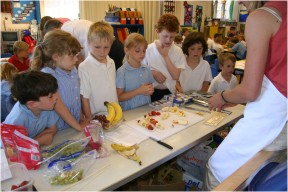
Tuesday Cookery Club 3.15 - 4.15 p.m. various age groups
Run by Tammy Howard,
Carolyn Peach & Lucy Artus
Wednesday ICT Club 3.15 – 4.15 p.m. for Yr 5 & 6
Run by Dr Holmes (Volunteer)
and Mrs Udall (Class Teacher)
Wednesday Science Club 3.15 - 4.00 p.m. for Yr 3, 4, 5 &6
Run by Miss Whatley
(Class Teacher)
Thursday Sports Club 3.15 - 4.00 p.m. for Yr 3, 4, 5 & 6
Run by Mrs Rae (Class
Teacher)
Friday Sports Coaching. 3.15 – 4.15 p.m.
Such as hockey, girls football,gymnastics,
yoga, golf, etc.
SPECIAL NEEDS
We recognise that all children bring with them their own special needs; emotional, social, intellectual and physical, just as they bring with them their own gifts. Educationally there are needs to be met both in enabling children to overcome difficulties and in ensuring that their gifts are recognised and opportunities provided for them to extend their abilities.

|
Page 19 |
We strive to identify children with particular learning difficulties as early as possible and to provide for them appropriately seeking outside help where this is desirable. The Educational Psychologist visits the school regularly to give advice or support to these children. Parents are always consulted before any referral.
ROAD SAFETY
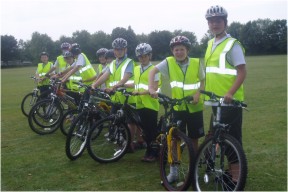
This school endorses the County policy on road safety education, which states that it is a parent’s responsibility to train their child to cope with roads and traffic. The County provides and distributes a free training programme, Footsteps, to help parents do this. Schools will support this work by offering opportunities to reinforce learning both within and outside the curriculum, appropriate to the age and experience of the child. Cycling Proficiency is usually taught during the final year at the school.
THE SCHOOL ASSOCIATION
We have a thriving School Association dedicated to the well-being of the school. In addition to fund-raising which has provided items the school could otherwise not afford, the Association organises social events both for families and for the village as a whole. They meet and plan various events throughout the year and always welcome the involvement of new families with fresh ideas. If you would like to know about the group, please contact Mr Shane Rae via the School Office.
BRIZE NORTON MOTHER AND TODDLER GROUP
The local Mother and Toddler Group meets each Tuesday from 1.15 p.m. – 3.15 p.m. This provides an opportunity for mothers of young children to meet. If you would like to know more about the group contact Helen Biro telephone number 843719
PLAYGROUP
We have a thriving village playgroup which meets Mondays to Fridays 9.00 to 12.00 pm in the village hall. There are close links with the school and the children benefit from this co-operation. If you would like further details about how to enrol your child or any other matter concerning the playgroup, please contact Christine Naus telephone number 01993 844010.
|
Page 20 |
NATIONAL CURRICULUM ASSESSMENT RESULTS - KEY STAGE 2

|
Page 21 |
NATIONAL CURRICULUM ASSESSMENT RESULTS - KEY STAGE 1

|
Page 22 |
NUMBER OF PUPILS ON ROLL
The number of pupils on roll at January 2006 was 92
AUTHORISED AND UNAUTHORISED ABSENCE
Authorised Absence
The percentage of half days missed through authorised absences was 4.7%
Unauthorised Absence
The percentage of half days missed through unauthorised absences was 0%

|
Page 23 |