

|
Page 4 |
- develop an understanding and tolerance of European and global cultures.
We provide:
- a safe environment where children are supported with experiencing and making well informed choices affecting diet, exercise and social relationships;
- a school environment which is well resourced, ordered and exciting;
- a broad, balanced and creative curriculum delivered in a rich, stimulating and caring environment;
- quality teaching and learning to ensure that each child reaches his/her potential and develops an enthusiasm for learning;
- provision of good staff training and development;
- opportunities to celebrate the efforts and successes of ourselves and of others for good work and behaviour;
- an environment where each child’s voice is valued and children experience leadership opportunities;
- opportunities to learn about and experience the local and wider environment;
- regular communication between home and school and opportunities for parents and the local community to engage in school activities;
- opportunities to learn another language and to experience other cultures.
Anna Fairhurst, September 2015

|
Page 5 |
SCHOOL ORGANISATION
Brize Norton Primary School takes children from the September after their fourth birthday until they are eleven. There are four classes. The school secretary is in the office until 2.30 p.m. We have teaching assistants for most of the day in each classroom. Other adults help on a regular or occasional basis.
There are around 110 children on roll. They are grouped into four classes for most activities and within these are smaller groupings. The organisation is as flexible as possible so that the needs of individual children can be considered. The children are grouped by age, ability, and socially, depending on the activity in which they are involved.
STAFFING
Headteacher
Anna Fairhurst
Teaching Staff
Sophie Kerr
Alexandra Rae
Helen Barker
Claire Musgrave
Cheryl Thornton
Sheila Henderson
Helen Cox
Bridget Winter
Caretaker
Colin Burnett
Teaching Assistants
Lyn Bostock
Lin Godfrey
Annie Coombs
Jane Kearvell
Jo Dickson
Celena Byng
Maxine Bridges
Secretary
Rosie Drake
Admin Assistant
Lisa Poyser
|
Page 6 |
Admin Assistant (Dinner Money)
Celena Byng
Kitchen Staff
Tammy Howard
Lisa Poyser
Lunchtime Supervisors
Jane Kearvell
Jo Dickson
Celena Byng
Maxine Bridges
Cleaner in Charge
Alison Mayhew
Road Crossing Officer
Rose Meadows
THE GOVERNING BODY
The Governing Body of Brize Norton Primary School advises on the overall development and management of the school in areas of finance, curriculum, special educational needs, personnel and premises.
The Governing Body of Brize Norton Primary School meet once a term consists of elected parents, Local Authority nominees, the Headteacher, community members and an elected teacher representative.
|
Page 7 |
CHAIR
tba
VICE-CHAIR
Phil Sampson - Parent
|
Anna Fairhurst - Headteacher Ex-Officio |
Christine Eaglestone - LA |
||
|
Rev James Maddern - Community |
Chris Rushton - Parent |
||
|
Tracy Barnett - LA |
Shane Rae - Parent |
||
|
Nicolette Craig - Parent |
Bridget Winter - Staff |
||
CLERK TO GOVERNORS
Hilary Peck
ADMISSIONS POLICY
In accordance with the County’s admissions policy, the governors aim to provide education for all primary aged children in the village of Brize Norton. The priorities laid out in the Oxfordshire Admissions policy will be observed.
Children will be admitted in September after their fourth birthday on a full time basis, if parents so wish. Legally, your child does not have to start until the term after your child is five. Admission arrangements and the deadline for submitting applications are published locally and all parents who would like their children to attend our school will be provided with guidance materials to support applications. These are published by the local authority.
The local authority deals with applications and places are allocated by the authority.
(For more details please see the Oxfordshire Admissions booklet.)
|
Page 8 |
PARENTS AND SCHOOL
We know that children develop to their best ability if parents, pupils and school staff work in a three-way partnership. The school has a home-school agreement, which was produced in consultation with pupils, parents, staff and governors. We believe that this sets out clearly the elements and expectations for effective partnership. This is given to parents when your child first starts school.
One of our main aims is to ensure that our pupils are able to develop in confidence. If you have any queries about school, or your child’s progress, please feel free to contact your child’s class teacher. They might not be able to speak to you when you call but will always contact you later the same day. We also have parent consultation evenings in the Autumn and Spring terms, alongside an open evening in the Summer term which accompanies the Annual Report. These are used to discuss progress, achievements and future learning targets.
Some of the best ways you can help us to help your child:
- Make sure your child arrives in school on time;
- See that he/she is wearing school uniform and school shoes for the day ahead;
- Check that he/she has all the necessary equipment including book bag, PE kits and homework;
- Clearly label all clothing and lunchboxes;
- Provide explanations for all absences;
- Talk regularly with your child about what he/she has done in school;
- Let us know of any changes to your circumstances or things which might affect your child in school;
- Let us know of any contact changes e.g. home or mobile telephone numbers, contact details;
- Support the school’s policies;
- Support the School Association.
In the Autumn and Spring terms each class prepares a sharing assembly, on a Friday morning at 9.10 a.m., in the School Hall. The children share their work and achievements. Parents are very welcome to join us for this assembly. We also hold a celebration assembly in the School Hall each week which rewards the children for good work, effort and keeping our school rules. Parents are invited to a celebration assembly each half term.
|
Page 9 |
LEARNING AT BRIZE NORTON PRIMARY SCHOOL
We offer a rich, well-resourced learning environment within a broad, skills based curriculum. Alongside which, we promote the children’s knowledge of how the brain works, and promote brain based learning. This can be seen in each class through every child having access to water, with water bottles on tables and visual, auditory and kinaesthetic elements to every lesson. All of these techniques allow our children to succeed in their learning, understanding that everyone learns in different ways. In finding their own strength to learning, we believe our children will succeed in life beyond school, thus supporting life-long learning.
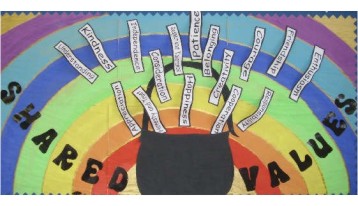
We are committed to achieving high academic standards, achieving this through both traditional and more innovative learning strategies. We want children to know the joy of learning and the pleasure and fun of working and playing together. The values we have agreed as a school underpin the school ethos and children living by these, are celebrated along with other achievements at our celebration assemblies each week.
THE CURRICULUM
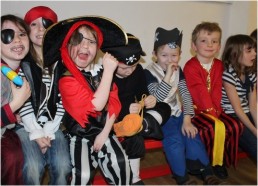
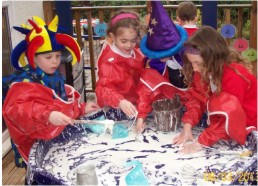
Our studies are planned to ensure that all children are given every opportunity to gain maximum achievement in the skills and knowledge outlined in the National Curriculum, and that individual needs are recognised and catered for. In creating a skills based curriculum, we have been able to provide learning situations which encourage children to develop key skills through a topic context.This provides a focus for our work each term and gives the children the opportunity to find information through personal research, problem solving, observation, discussion and reading. We offer the children experience in recording their findings in writing, mathematically, using technology, in drawing, painting and music. All of these activities will be going on during an ordinary school day.
|
Page 10 |
FOUNDATION STAGE
The Early Years Curriculum applies to all children who join the school at the beginning of the academic year in which they are five. This year group is often known as Reception and will follow the Foundation Stage curriculum. The Foundation Stage is part of the National Curriculum and prepares children for learning in Key Stage 1. The early year’s education we offer our children is based on the following principles:
- It builds on what our children already know and can do;
- It ensures that all children are included and have access to the whole curriculum;
- It offers a structure for learning that has a range of starting points, content that matches the needs of young children and activity that provides opportunities for learning both indoors and outdoors;
- It provides a rich and stimulating environment.
The outcomes emphasise the development of personal and social skills, as well as the development of language, mathematical, physical and creative skills, and knowledge and understanding of the world.
The children will enjoy lots of practical activities, both inside and outside. Children at this stage do not differentiate between work and play and well-planned play is a key way in which children learn with enjoyment and challenge. It is also important that children have the opportunity to initiate their own play on a regular basis. They need time to become engrossed, work in depth and complete activities.

|
Page 11 |
ENGLISH
The teaching of English occupies a large part of the time in school. The new National Curriculum for English emphasises the entitlement of children to a structured English lesson each day. Literacy is an aspect of learning which is a fundamental part of all the other areas of the curriculum. Children have a wide knowledge of English, in both its spoken and written forms, before they start school. They develop this knowledge not only in the classroom, but at play and at home as well. In planning for the children’s learning in English, the knowledge which the children bring to school is taken into account. By building on what they already know, we develop the children’s skills and understanding as set out in the National Curriculum.
Throughout the Foundation Stage and Key Stage 1 our children learn phonics in a discrete daily session with the aim that that they become fluent readers, having secured word recognition skills by the end of Key Stage 1. As a school we follow a synthetic phonics scheme, ReadWriteInc which systematically teaches children the grapheme (letter) and phoneme (sound) correspondence. Children are taught to blend sounds from left to right to read words and to segment sounds to spell words, recognising that these are reversible processes. High frequency words are taught daily that do not conform to the grapheme/phoneme correspondence rules. Children are regularly assesses and grouped by phonic ability in each class. At the end of Year 1 children have to carry out the statutory Phonics screening check.
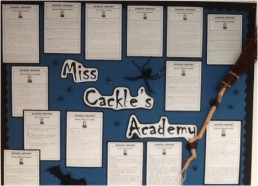
In addition to the daily phonics session, children are taught to read in small differentiated groups guided by the teacher or other adult helper. Children are taught a range of reading strategies to get at the meaning of the text and are encouraged to explain their response to the text. The teacher also models reading strategies to the whole class using both big books and enlarged texts. We have a wide range of fiction and non-fiction books and children are encouraged to use these for their studies, their personal interests and simply for pleasure. Please read our ’Reading Information’ booklet. Children will need a book bag to take their books and reading record to and from school. Our aims in writing are to help the children become confident writers for a variety of purposes, audiences and in a variety of styles (e.g. charts, diagrams, factual, reflective, etc.). To become effective writers children need:
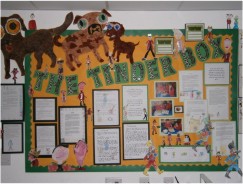
|
Page 12 |
- to have structured guidance;
- to read;
- a reason for writing;
- opportunity to share writing with other children and adults;
- to see adults writing and reading.
Our aims in speaking and listening are to provide a range of situations, audiences and activities which encourage children’s competence, precision and confidence in talking. Active listening to what others have to say and reflecting upon the ideas of others is also a very important part of learning. We provide an atmosphere conducive to purposeful talk so that children may become effective communicators.
MATHEMATICS
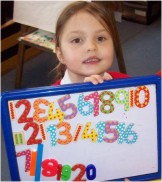
Mathematics is taught through a wide variety of activities. We follow the new National Curriculum 2014. Our teaching is aimed at developing understanding and enjoyment in Maths. We aim to provide the children with basic numerical skills and the ability to apply them in a problem solving situation. We emphasise the importance of mental calculation throughout the school and develop written strategies in a systematic way in line with National guidelines. Please see our ‘Maths Information’ booklet. We use a range of computer programmes to allow children to independently revise key mathematical concepts.
SCIENCE
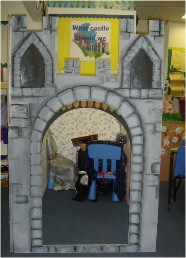
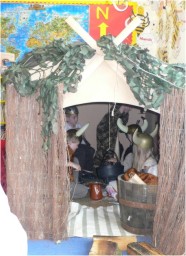
Our aim is to encourage the children to think scientifically and to apply their thinking independently and in a wide variety of situations. Children learn to apply scientific methods of investigation and to acquire scientific knowledge of the world around them. Our science work follows a two-year cycle of topics, designed to cover the National Curriculum programmes of study. We are very fortunate to have our own garden, wild flower area, pond and chicken run. We use these facilities to enhance the science curriculum. In 2012 the school achieved the Eco-school Green Flag award.
.JPG)
|
Page 13 |
COMPUTING
Children are taught to understand and use a wide range of technologies, including iPads. They learn basic programming skills from Key Stage 1, building up to creating games and other programs for a range of purposes. In addition, they use technology as a tool, to extend their recording, to handle data, and to challenge their mathematical thinking. Each class has its own computers which have internet access. Other equipment which is used as appropriate includes digital cameras, video, audio equipment and roamers which are used for control technology. Classes have interactive white boards.
GEOGRAPHY
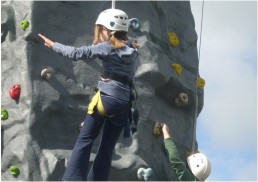
Geography is taught in a cross curricular approach within a skills based programme. Children learn how humans influence the changing patterns of the world, alongside natural phenomenon, rivers, coastal erosion, mountain environments and contrasting localities. Field trips provide a valuable resource and these are used fully to support geographical learning ranging from day trips to the Year 5/6 residential.
HISTORY
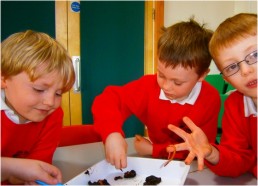
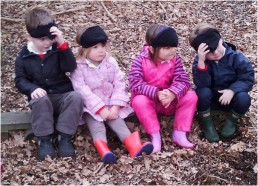
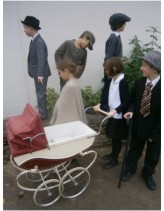
At Brize Norton Primary School, we believe that history is key in developing inquisitive minds. History helps them develop an understanding of the world, allowing them to engage in meaningful debates about actions and consequences of characters and events of the past. History is taught through a topic based approach that encompasses many other aspects of the curriculum. Children explore the past through the use of artefacts, books, drama, visitors and visits to museums.
|
Page 14 |
RE
The school follows the Oxfordshire Agreed Syllabus for Religious Education.
We believe that RE provokes challenging questions about the purpose of life; about God; issues of right and wrong and what it means to be human. We aim to develop knowledge and understanding of Christianity and other world religions - Judaism, Islam and Hinduism. Through the teaching of RE, we offer opportunities for spiritual and personal reflection, whilst enabling pupils to develop respect for and sensitivity to others, particularly those with a different faith from their own. Parents have the right to withdraw their children from religious education and collective worship if they so wish.
DESIGN TECHNOLOGY
The principles of Design Technology are fundamental to the developing world around us. We encourage children to learn and develop skills in design, production and problem solving through topic based projects that allow them to be involved in every stage of the production, from research to the end product. This gives children the opportunity to develop both their physical and social skills; skills that we hope will prepare our children for entry into the adult world.
MUSIC
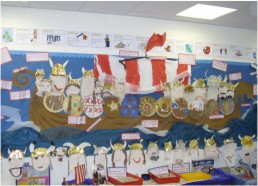
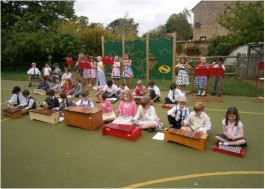
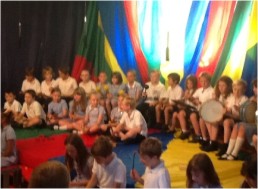
Music and Art hold a strong place in the life of the school. The children sing and have the opportunity to play their musical instruments, as well as to listen to recorded music. Some children have instrumental lessons once a week from the Oxfordshire Music for Schools Service. These are children who have shown some interest and aptitude. We have a wide range of percussion instruments for general classroom use. Children in Years 5 and 6 all learn a brass instrument.

|
Page 15 |
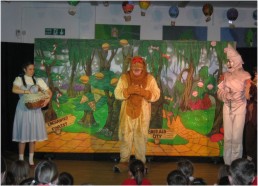
The school produces 2 concerts a year where children can play any instrument they are learning at home or school. All children take part in singing, irrespective of ability.
ART AND DESIGN
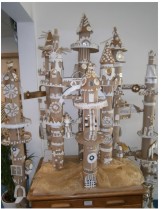
Art enables children to express themselves. They learn about colour, texture,
tone, line and form through the media of paint, clay, textiles, charcoal
and pencil. Art is celebrated in the school through displays. Throughout
the year the children also study the work of other artists. The children
benefit from annual visits by artists.
We have been awarded the silver Artsmark
award for our commitment to the arts.
FRENCH
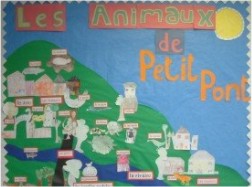
French is taught to all children. The emphasis is on spoken French but the scheme followed does involve written French with the older children.
|
Page 16 |
PHYSICAL EDUCATION
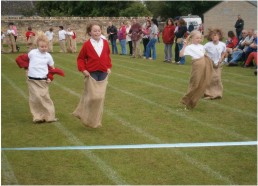
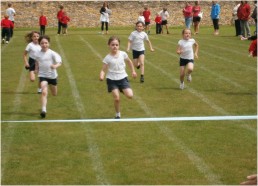
We have a village hall which is available for gymnastics on Fridays, the School Hall for dance and drama, and the recreation ground is used for games when and where there is not enough space on our artificial surface. The children are encouraged to use their breaks for activities such as skipping and team games. A football club takes place on Monday from 3.30 p.m. to 4.30 p.m. This is run by a football coach formerly from Southampton Football Club. We also provide a range of sporting clubs after school. This includes sports such as netball and cricket, rounders and athletics. The children travel to Carterton each week, on a rota by coach to swim at the sports centre there. In keeping with County policy, most children are able to swim by the age of eleven. We have coaches on a regular basis to teach a variety of sports such as hockey, tag rugby and girls' football. We take part in a variety of sports fixtures within the Burford partnership e.g. cross country, swimming, athletics, tennis, dance, etc.
PERSONAL, SOCIAL, HEALTH AND CITIZENSHIP EDUCATION
The social, spiritual and personal development of our pupils is a major part of our school ethos where we strive to promote values and attitudes in the children we teach. We aim to create happy, thoughtful creative children who enjoy their own individualism. We believe in promoting a positive atmosphere in which children may grow as individuals and pupils are given responsibilities and roles which allow them to develop their citizenship skills in class as well as being an effective member of society.
P.S.H.C.E. is about the health and well-being of the child, their relationships with others and their role in the community. It also allows the children to investigate their emotions in a safe and supportive atmosphere and discuss their emotional well-being in a trusting environment. It is very much part of the whole curriculum and pupils may raise an issue at any time during a lesson. P.S.H.C.E helps to encourage the children to question the world around them and gives them knowledge to make informed and reasoned decisions.
We also follow the SEAL initiative, (Social Emotional Aspects of Learning). This programme allows the children to develop a clearer understanding of themselves and how they relate to others as well as a clearer knowledge of how to understand and manage their feelings. This has a termly focus that is studied across the school and links in with the collective worship themes.
|
Page 17 |
SEX EDUCATION
Our sex education programme is presented in the context of a broad and balanced programme of health education. It is integrated fully into the curriculum and is not isolated in any way. The aim of sex education in our school is to communicate to the children the knowledge they need to appreciate the individuality and uniqueness of each person, to cope with the physical and emotional changes of growing up and to give them the skills needed to build close relationships, expected of themselves and others. Year 6 children are taught about the onset of puberty. Parents are notified when this will be and they have the right to withdraw their child should they so wish, as they do for all or part of the Sex Education provided, except that which is required as part of the National Curriculum.
GLOBAL LEARNING
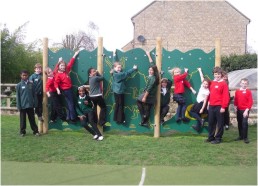
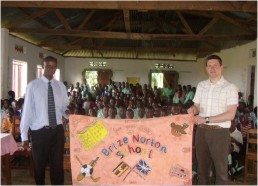
Brize Norton Primary School recognises the importance of equipping our pupils to meet the challenges of the 21st Century. A programme of global learning is essential because the lives of our children are being constantly informed and shaped by events around the world. We have a responsibility to develop in our pupils the knowledge, skills and values they need to be able to understand and participate in the world around them. A global learning programme helps pupils think critically and creatively, develop self-awareness and a positive attitude to difference, allowing them to become responsible citizens. Through the creative curriculum at our school, we make opportunities for all children to learn about different countries and cultures. We aim for them to develop a full sense of identity, understanding the wider groups that we belong to. French is taught with all year groups each week. The school works in partnership with schools in the UK, Europe and Africa. Our school is accredited with the International School Award.
|
Page 18 |
COLLECTIVE WORSHIP
We gather each day either as a whole school or in class for assembly to consider some aspect of our relationships with each other, with the wider community and with our planet. This time also gives recognition to the spiritual dimension in our lives. The children participate in these assemblies by contributing to discussions, answering questions and posing their own experiences related to the subject or the assembly. This might be drama, a piece of music, or some particularly remarkable achievement they have made.
CHARGES FOR SCHOOL ACTIVITIES
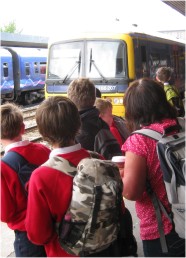
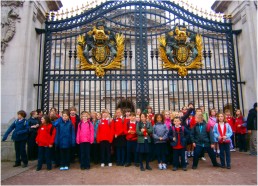
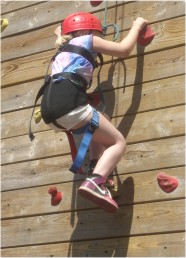
Study visits are an important extension of the children’s learning, and visits are often planned as part of the children’s topic work. The older children are given the opportunity to make at least one field study outing where they can study an environment different from their own. In line with county recommendations, the governors have adopted a policy where voluntary contributions are requested to cover the cost of visits and other activities. Each request will state that there is no obligation to contribute and that a child will not be treated differently should their parent choose not to pay. In the event of the cost of a visit not being met, the activity would have to be cancelled. Activities for which the school charges include the board and lodging element of residential visits and activities outside school hours and the costs of materials that are used at school and later taken home.
|
Page 19 |
EXTRA CURRICULAR ACTIVITIES
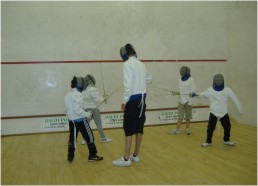
We offer a range of after school clubs each week e.g. sports, ICT, cooking, art, wildlife and drama. These are run by staff and volunteers.
SPECIAL NEEDS
The Special Educational Needs of all children at Brize Norton Primary School are met through early identification and assessment. This is done in class by teachers and teaching assistants together with the school’s Special Educational Co-ordinator and through involvement of LA Professionals where required. All pupils, whether they have ‘special educational needs’ or not, are treated equally and all have their own individual targets in Literacy and Numeracy. In addition to this, pupils who need additional assistance to make progress, have an Individual Education Plan, which is tailored to suit their specific needs. Children may work individually on a one-to–one basis with a Teaching Assistant or in a very small group and we use a variety of intervention programmes to enable each child to make small steps to achieve success. The Headteacher deploys Teaching Assistants to work with pupils with special educational needs. The progress of pupils with special educational needs is monitored each term. The SENCo keeps detailed records for each child and pupils and parents are involved in review meetings each term.
|
Page 20 |
MORE ABLE, GIFTED AND TALENTED
More Able, Gifted and Talented pupils are here defined as ‘pupils who have ability or abilities beyond that of those of the large majority of their peer group and who consequently require a more challenging curriculum than that appropriate for the large majority.’ DfES guidance contained within the Excellence in Cities programme states that all schools are expected to identify 5 - 10% of pupils as More Able, Gifted or Talented.
Our definitions:
Gifted pupils are those who have innate ability in English, Mathematics or Science.
- Intellectual - aspects of English, Maths, Science
Talented pupils are those who have abilities in areas such as Dance, Drama, Technology, Art etc
- Artistic & Creative - Art, Design, Music, Drama
- Practical - Design & Technology, Mechanical ingenuity
- Physical - P.E. Sports, Dance
More Able pupils are those pupils who work significantly above the level of the majority of their peers
In addition we seek to identify pupils who may well fit into the above categories in the future, but who are not currently fulfilling their full potential.
Our Aims:
- To realise children’s potential by providing equal opportunities that promote learning, enthusiasm, creativity and achievement.
-
Through supporting the development of every child we recognise the existence
of all round ability and those who may be talented in a specific area.
- In meeting the needs of the Gifted, Talented and More Able pupil we aim to encourage all children to explore their talents, exercise their capacity to learn and understand, and to develop their self-confidence.
- We will aim to celebrate their achievements and challenge children to perform to the best of their ability.
- Breadth and enjoyment in learning;
- Social skills and self-confidence;
- Thinking and problem solving skills;
- Communication and Presentation skills;
- Access to resources, common role models where appropriate;
- Team working and leadership skills;
- Sharing their work and skills with each other.
- eliminate discrimination,
- advance equality of opportunity
- foster good relations
- Publish equality Information – to demonstrate compliance with the general duty across its functions (We will not publish any information that can specifically identify any child)
- Prepare and publish equality objectives
|
Page 21 |
We aim to develop:-
We work hard at Brize Norton Primary School to liaise with parents, other schools and local businesses to try to provide a varied learning experience for all pupils. This allows children who are Gifted or Talented in areas such as music or drama to show and share their talents.
HOME LEARNING
Children often want to follow up activities at home and parents may enjoy becoming more involved in their child’s learning. We encourage and expect all children of all ages and capabilities to read at home regularly. In addition to reading, weekly maths and English homework is also given, with the length and complexity dependent on the age and requirements of the child. Older children are also asked to complete weekly research linked to their science or topic work. The amount of daily homework is published in our Homework Policy and follows government guidelines. These are provided at the beginning of each school year in a parent newsletter, and can also be found on the school website.
|
Page 22 |
BEHAVIOUR
Good behaviour is an outcome of a positive and safe environment, where children feel challenged and never threatened. Good behaviour supports learning, and in Brize Norton Primary School, we expect outstanding behaviour, with the whole community working hard to achieve and maintain it.
The children are encouraged to be responsible and thoughtful in their behaviour, considering how it affects others in the community. At the start of each year, classes decide on their classroom rules, giving them ownership over their classroom ethos. Awards are given out for good behaviour and kindness. Other awards are given for excellence in curriculum areas focused on each term. Circle Time plays a large part in the children’s involvement in the general behaviour around the school and their commitment to each other.
Issues like bullying are addressed in this open “No Blame” atmosphere and the children agree strategies to deal with them. Each class discusses and negotiates the class rules relevant to them. If a child’s behaviour is giving concern, this is discussed at a personal level with the child and later with the parents if this is considered appropriate. The Behaviour Policy is communicated to parents at the start of each school year and is available on the school website.
PUPIL PREMIUM FUNDING
Brize Norton Primary School receives Pupil Premium funding in addition to the schools budget. This government fund has been established to address inequalities for children in receipt of free school meals or in the looked after care system; narrowing the attainment gap for disadvantaged children. In addition to this the school receives funding for children whose parents are serving in the armed forces, to support their emotional and social well-being.

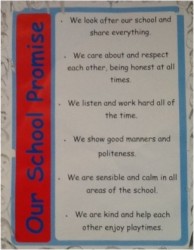
|
Page 23 |
The school tracks the achievement of the children in receipt of Pupil Premium funding and analyses the impact of the funding on outcomes for children. Full details are available on the school website.
ATTENDANCE
Regular and punctual attendance is vital for children to achieve their potential and experience success. Our Attendance Policy is available for all parents to read.
We want to ensure that our children attend 100% of the time and will work closely with parents to ensure this occurs. Holidays should not be taken during term time. Under amendments to the Education Regulations 2006, from September 2013, headteachers may not grant any leave of absence during term time unless there are exceptional circukmstances.
If a child is going to be late for school or absent through illness, we appreciate a message before 9.30 a.m. as we are concerned if a child does not arrive. We are required to record reasons for absence daily, so if for any reason your child is going to be away, please send a letter explaining the circumstances.
Unauthorised absences are recorded and reported to the Department for Education annually. The Attendance and Engagement Officer monitors attendance levels and contacts parents where there is a concern about the level of absence. The school will work with parents to ensure that they are supported in ensuring their child attends school.
ASSESSMENT
Assessment is a vital, integral part of classroom practice. It forms the basis for gathering information about each child’s progress. It enables curriculum goals and targets to be set and planning to be appropriate. Teachers are continually observing and recording, identifying children’s strengths and ways forward. Staff teams work closely to agreed standards within and across year groups.
Children in Years 3, 4 and 5 sit annual tests in May/June. At the end of KS2, in Year 6, children sit statutory National Curriculum Tests in English and Maths. At the end of KS1, Year 2 children are assessed using ongoing teacher assessment and standardised tests. Children at the end of Year 1 are assessed using the statutory phonics screening check. All test results are used to inform teacher's on-going teacher assessment and these will be shared with parents throughout the school year and a summary provided in the annual report or at an open evening.
Each term the teachers use a range of data from teacher assessments to track the progress pupils are making in curriculum subjects. Any children who are at risk of under-attaining (not reaching national expectations) or under-achieving (not reaching their potential) are identified and additional programmes of work are devised as appropriate.
|
Page 24 |
In December 2012, we achieved the Quality Basic Skills Award for our tracking of pupil progress and for the identification of and provision for individual needs in English and maths.
DAILY ROUTINES
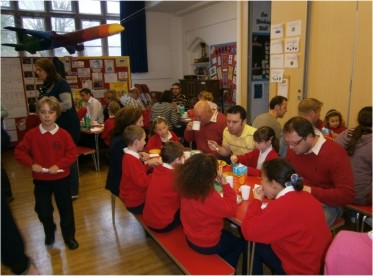
The school day starts at 9.00 a.m. and finishes at 3.15 p.m. Children may enter the school from 8.40 a.m., where a range of early morning activities will be provided. All children enjoy playtime together either on the playground or in the Foundation Stage garden. During the morning children have a story and snack time. This is a time when the whole class sits down and eats together. Children in Foundation Stage and Key Stage 1 are provided with a fruit snack. In Key Stage 2, children should bring a fruit snack from home.
Children may also have milk during the day. This is free for under-fives or can be purchased for other children. Details of the ordering scheme are available from the school office.
Lunch break is from 12.00 noon till 1.00 p.m. Our delicious school lunches are cooked on the premises. Meals are provided by Food with Thought and meet nutritional guidelines, supporting our Healthy School status and our 5 star food hygiene rating. If not eating a cooked lunch, children should bring a healthy packed lunch. The school has a Whole School Food Policy which is available on the website.
Lunch money is collected on a Monday and Friday in the week a child has taken meals. Correct money should be sent in an envelope with your child (children)’s name on it, as this saves very valuable time and it is helpful should your child lose the envelope. Should you believe you might qualify for free school meals, please contact Anna Fairhurst or Rosie Drake the school secretary. The matter will be dealt with in strictest confidence.
We pride ourselves in creating a pleasant eating environment. Lunchtimes are a time for the school family to enjoy pleasant conversation over lunch. Each week a lunchtime table group is chosen to sit at the Special Dinner Table. It is a reward for showing good table manners and eating healthily.We also reward ‘stars of the day’ to children who are making positive choices at lunchtime. Each term we invite parents into school to sample a cooked meal and our lunchtime atmosphere!

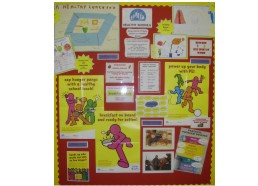
|
Page 25 |
Working time during a week for Key Stage 2 is 23 hours 10 minutes and for Key Stage 1 and Foundation Stage is 22 hours 20 minutes. These times do not include registration, assembly and breaks.
SCHOOL UNIFORM
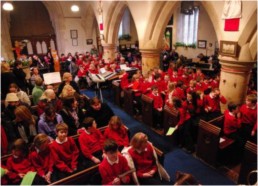
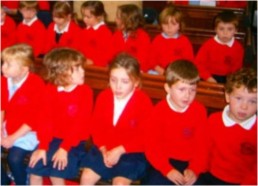
Children wear school uniform which consists of our red Brize Norton sweatshirt. It is worn with a white polo shirt (logo optional) and navy blue trousers or skirt. Optional items are also available including reversible jackets and school scarves. In the summer months (Easter to October half term) girls may wear white and blue checked dresses and boys smart navy shorts. It is essential that all clothing is named.
Children are required to wear smart black or navy school shoes and are advised to bring an old pair of trainers for playtimes.
Each child should have a pair of navy shorts and a plain white T-shirt for PE. These should be in school at all times and in addition in winter, they should have tracksuit bottoms/leggings and navy sweat-shirt. These will be kept in a bag on the child’s peg.
School sweatshirts can be purchased from the school and other uniform items from our online shop at www.pmgschoolwear.co.uk.
For reasons of safety, children should not wear jewellery in school. If they have their ears pierced, they should wear studs. No responsibility can be accepted for these by staff and they should not be worn on swimming days or PE days. Girls are not permitted to wear make-up or nail varnish in school.
Children swim at Carterton pool on Tuesday afternoons on a rota basis and need swim-wear and a towel. They are required to wear a hat and these can be purchased from school. They travel by coach to Carterton. We ask for a contribution to help cover the cost of swimming. Children who are in school are expected to take part in this activity.
|
Page 26 |
HEALTH AND SAFETY
Brize Norton Primary School achieves outstanding levels of health and safety as reported in our most recent LA inspection (March 2013).
It is essential that we have up-to-date contact information for you to enable us to inform you if your child is taken ill or has an accident in school.
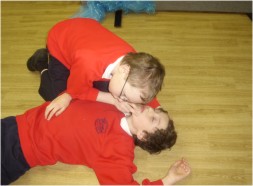
Pastoral care is exercised by all staff while the children are in our care. This includes all teaching staff, teaching assistants and lunchtime supervisors. It is our aim to create a family atmosphere where all adults care for all children and all children care for each other. Children are supervised at all times and should an accident occur or a child be taken ill, parents are contacted as soon as possible. Failing this, medical help is sought by the headteacher in loco parentis. In the event of first aid treatment having been administered, whenever possible, school staff inform parents directly. Where this is not possible, children are sent home with an information slip detailing the nature of the injury and the action taken. All injuries are recorded in the accident book.
Due to tightening in legal legislation, we are only able to administer prescribed medication. All medicines should be taken to the school office by the parent, where you will be asked to sign a consent form. All medicines should be clearly labelled with the correct measuring spoon attached. Children should not hold medicines, tablets, ointments of any kind except asthma inhalers and epi-pens which will be stored in each classroom. Full details can be found in the Administrating Medicines Policy available from the school office and website.
If cases of headlice occur, children will not normally be excluded, but advice is given to parents concerning treatment, and should be followed by the whole family
SECURITY
During the school day the gates to the playground and all outside doors are locked. We ask all visitors to report to the main office (blue door at the side of the building) and sign in. Visitors will be issued with identification badges as required by Oxfordshire County Council and will be asked to sign out upon leaving. This is to ensure that no unauthorised persons can enter the school and to fulfil fire regulations.
|
Page 27 |
ROAD SAFETY
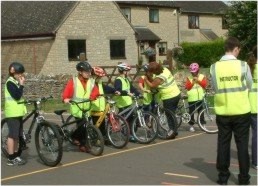
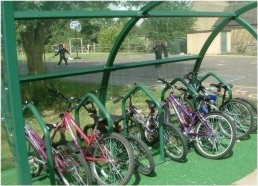
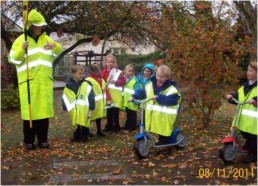
This school endorses the County policy on road safety education, which states that it is a parent’s responsibility to train their child to cope with roads and traffic. The County provides and distributes a free training programme, Footsteps, to help parents do this. Schools will support this work by offering opportunities to reinforce learning both within and outside the curriculum, appropriate to the age and experience of the child. Cycling Proficiency is usually taught to children in Year 5 at the school.
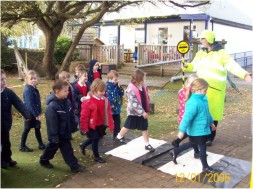
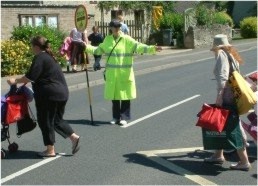
We have a school patrol crossing and we urge parents to show their children the importance of using it as the safest place to cross. PLEASE encourage your children, even when they are with you, to stand by the Road Crossing Officer (Lollipop Lady) until she goes out to guide them across. It could mean saving their lives.
Parking near the school is very limited, so we ask parents to be very careful not to block our neighbours’ drives. They are very interested in the school and supportive of us, so this is a consideration we would appreciate. There is a village car park, which is free, only a short distance from the school and there is a footpath from there to the school. It is parents’ responsibility to see their children into school and to collect them after school.
|
Page 28 |
COMMUNICATION
The school communicates with parents regularly to keep you informed. We ask all parents to read newsletters which are sent home/sent by email on the first Wednesday of each month and check school notice boards. The school has a very informative website (http://www.bnschool.org), where newsletters and information regarding school events can be found. The school also uses a text message service to inform parents of any last minute notices. A parent noticeboard is located in the playground detailing all current notices. The school also has a Parent Council with a representative from each Year Group who meet with the headteacher once a month.
CHILD PROTECTION
The school has a duty of care and the right to take reasonable action to ensure the welfare and safety of its pupils. If the school has cause to be concerned that a pupil may be subject to ill treatment, neglect or any other form of abuse, the school will follow the Child Protection Procedures – first meeting with parents/carers (if appropriate), and then, if a satisfactory conclusion is not evident, or concerns remain for the well-being of the child, refer the case to Social Services for further investigation.
When assessing the need for such action, the child’s best interests will be paramount. A copy of the School’s Child Protection Policy is available from the school on request.
Child Protection Lead: Mrs Anna Fairhurst
Second Name CP lead: Mrs Bridget Wintert
SAFEGUARDING CHILDREN STATEMENT
The school is committed to safeguarding and promoting the welfare of children and expects all staff and volunteers to share this commitment.
All staff, governors and volunteers are CRB checked. All staff appointments are made only following rigorous safe recruitment practices.
|
Page 29 |
EQUALITIES POLICY
Brize Norton Primary School is committed to ensuring that it fulfils its duties under the Equality Act 2010. Equality at our school is about providing equality and excellence for all to secure the highest possible standards of attainment and education. Equality applies to all members of the school community: pupils, parents, staff, community and governors.
As a school we welcome our duties under the Equality Act 2010. The general duties are to:
We understand the principle of the act and the work needed to ensure that those with protected characteristics are not discriminated against and are given equality of opportunity.
In order to meet our general duties, listed above, the law requires us to fulfil specific duties to demonstrate how we meet the general duties. These are to:
Brize Norton Primary School has an agreed equality policy and plan. We have a rolling programme for reviewing our school policies and their impact. In-line with legislative requirements, we will review progress against our equality objectives set annually and review this policy and accompanying action plan on a three year cycle. The school publishes information to demonstrate compliance with the three aims of the Equality Duty annually where doing so does not identify individual pupils in a small school.
COMPLAINTS
Should any parent have a complaint regarding school curriculum, or any other matter, they should first contact the class teacher or the headteacher as appropriate. If attempts to resolve the complaint fail at this stage the next step would be to contact a governor who would advise on the appropriate action. The school has a complaints procedure which is available from the School Office and school website.
|
Page 30 |
THE SCHOOL ASSOCIATION
We have a thriving School Association dedicated to the well-being of the school. In addition to fund-raising, which has provided items the school could otherwise not afford, the Association organises social events both for families and for the village as a whole. They meet and plan various events throughout the year and always welcome the involvement of new families with fresh ideas. If you would like to know about the group, please contact Mrs Rushton via the School Office.
SCHOOL COUNCIL
Our School Council is made up of two children from each class. Issues are written by the children or adults into the school council book. The council meets with a member of staff once a week to discuss issues that have arisen. These are then brought to the attention of the rest of the school, so that all the children are involved in the decision-making. The School Council produces a children’s development plan each year and works with the Headteacher to improve the school. It is actively involved in planning school events and raising money. The School Council holds a budget which they are responsible for spending wisely!
LINKS WITH BRIZE NORTON PRE-SCHOOL
We have a thriving village pre-school which meets Mondays to Fridays 9 am to 12 noon in the village hall. We have close links with the pre-school, and have put into place a detailed transition program for our youngest learners as they move from pre-school to primary school.
The Foundation Stage class teacher will visit all of the children in their pre-school setting and meet them, whilst at the same time discussing their individual characters with the pre-school leader.
In the summer term a range of transition events are planned for children and parents. These will include informal drop-in sessions during the school day, lunch invitations and a shuffle up day for the children. For parents we hold an information evening for new parents, an open evening and provide parents with a starter pack of relevant information.
|
Page 31 |
If you would like further details about how to enrol your child or any other matter concerning the pre-school, please contact the pre-school on telephone number 077696 17696
SECONDARY SCHOOL LIAISON
The majority of our children continue their education at Burford School and Community College at the age of eleven. Each September the County Council issues parents whose children are in Year 6 a booklet entitled “Moving On”. This booklet lists the timetable for starting Secondary School; each school’s open evenings and contains the CAF (Secondary) application form.
Parents are advised to attend the open evenings of their 3 preferred schools before completing the CAF. Forms should be returned to your child’s current primary school in plenty of time. Late returns will not be dealt with at the same time and may result in your child not getting a place at their preferred school
Burford School provides a programme of transition events for children who are in Year 5 with an information evening for parents and children. This continues in Year 6 through a range of sports events and day visits. During the last term at primary school the children start a transition project which is completed when they start Year 7.
EXTENDED SERVICES
Brize Norton Primary School works closely with the Burford Partnership of schools to provide the core extended services offer. We provide a range of after school clubs each night of the week, most of which finish at 4pm.
The school provides swift and easy access to specialist services for children and families where appropriate. This ensures a multi-agency approach so that professionals can work with a child or family, planning and delivering a package of ongoing support designed to overcome barriers to learning.
|
Page 32 |
TERM DATES FOR 2014/2015 Updated 30th September 2014
Autumn Term 2014
Term 1 Tuesday 2nd September to Friday 24th October
Half
term Monday 27th October to Monday 3rd November
Term 2 Tuesday 4th November
to Friday 19th December
Spring Term 2015
Term 3 Wednesday 7th January to Friday 13th February
Half
Term Monday 16th February to Friday 20th February
Term 4 Monday 23rd February
to Friday 27th March
Summer Term 2015
Term 5 Monday 13th April to Friday 22nd May
May Day Monday
4th May
Half Term Monday 25th May to Friday 29th May
Term 6 Monday 1st June
to Friday 17th July
INSET DAYS FOR STAFF TRAINING
1st, September 2014
3rd November 2014
5th, 6th January 2015
20th July 2015
|
Page 33 |
SCHOOL CLOSURE
Very occasionally it is necessary to close the school at short notice. This may happen in exceptionally bad weather in winter or when there is a loss of essential services such as the water or electricity supply. This information will be put on local radio that same morning or the evening before if possible (BBC Radio Oxford and Heart FM).
The Headteacher will make the decision which will always be based on maintaining the safety and welfare of pupils and staff, balanced with the objectives of keeping the school open to as many pupils as possible for as long as possible.
Thank you for taking the time to find out more about us. We hope we have answered lots of your questions, but if you have any queries, please do not hesitate to contact us.
|
Page 34 |
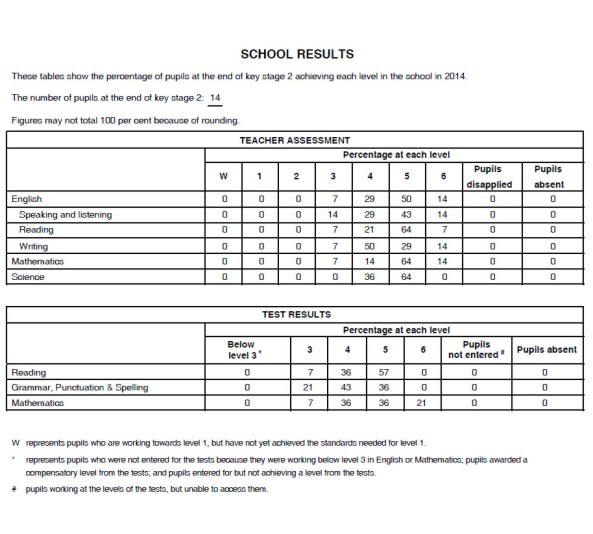
NATIONAL CURRICULUM ASSESSMENT RESULTS - KEY STAGE 2
The information below illustrates the attainment of children at Brize Norton Primary School at the end of Year 2 and Year 6 in 2014. In addition to this information, the school publishes its most recent Key Stage 2 results, as published by the Secretary of State, on the school website when these become available. Parents may access the School Performance Tables on the Department for Education website - http://www.education.gov.uk/schools/performance
|
Page 35 |
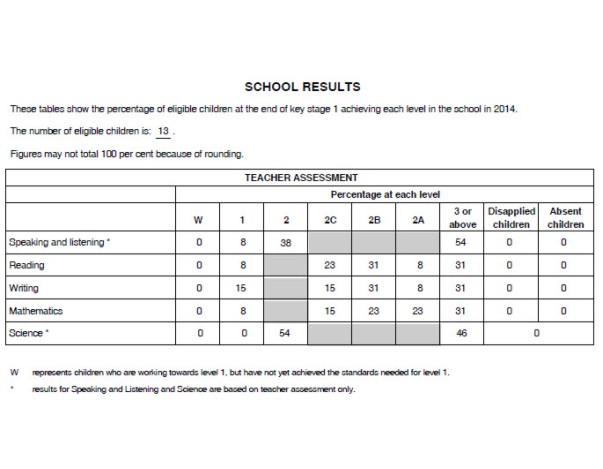
NATIONAL CURRICULUM ASSESSMENT RESULTS - KEY STAGE 1
NUMBER OF PUPILS ON ROLL
The number of pupils on roll at September 2013 was 110
AUTHORISED AND UNAUTHORISED ABSENCE
2nd September 2013 – 22nd July 2014
Total Attendance 97.18%
Authorised Absence
The percentage of half days missed through authorised absences was 2.55%
Unauthorised Absence
The percentage of half days missed through unauthorised absences was 0.26%
|
Page 36 |
|
Page 37 |